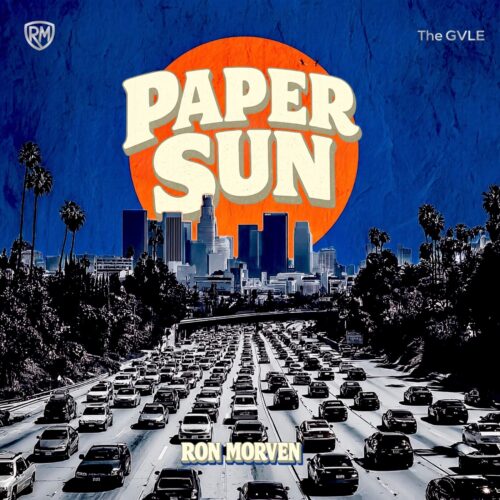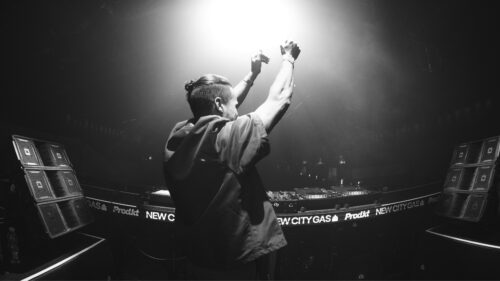
Ron Morven releases “Paper Sun,” his first official single and an international debut that merges dance energy, electronic depth, and cinematic imagination into one cohesive sonic experience.
While its visuals draw from the atmosphere of Los Angeles freeways, where asphalt, amber light, constant motion, and sensory overload shape its aesthetic, ‘Paper Sun’ extends far beyond one specific city. At its heart, the song speaks to a broader human experience: the growing pressure of modern life amid crowded streets, relentless routines, and days that move faster than we can process. Instead of remaining confined within that intensity, the track transforms it into pulse, movement, emotional energy, and ultimately, release.
With ‘Paper Sun,’ Morven also introduces a sound that can be described as Transatlantic Narrative House: melodic electronic music shaped by a European emotional sensibility, an international visual scale, and a stronger narrative dimension within its writing and imagery. Moving between euphoria and tension, light and overload, speed and release, the record is crafted for dance radio, playlists, and crossover electronic audiences.
EXCLUSIVE INTERVIEW
1. What was the first image, feeling, or idea that sparked the creation of Paper Sun?
The first image was very simple: sunlight hitting a windshield while everything around you is moving, but you still feel stuck. That contrast stayed with me. There was something almost cinematic about it — the heat, the road, the repetition, the feeling of being trapped inside motion.
Paper Sun started from that tension. It was not only about traffic or a city landscape, but about that moment in everyday life when pressure becomes almost hypnotic. You keep moving, you keep going, but emotionally you are looking for a way out.
2. The track explores themes like pressure, repetition, and release. How personal was that emotional landscape for you while writing the song?
It was personal, but not in a confessional way. I did not want to write a song that explained everything too directly. I wanted to capture a feeling that many people know: the pressure of routine, the noise around you, the sense that your day is controlling you more than you are controlling it.
For me, the emotional core of the track is not sadness. It is resistance. It is that internal push you feel when you are tired of being compressed by the same patterns, and you need one moment of release — something physical, melodic, almost liberating.
3. Paper Sun has a strong cinematic atmosphere. Do you visualize scenes or narratives while producing music?
Yes, always. I come from storytelling, so I rarely think of a track as only a sequence of sounds. I see movement, frames, light, characters, locations. With Paper Sun, I had a very visual world in mind: Los Angeles highways, old television colors, motorcycles, heat, asphalt, and that slightly retro feeling of a chase scene that is more emotional than literal.
I like when music creates a space the listener can enter. Even if there are no images in front of you, the track should suggest a world. That is very important to the Ron Morven project.

Credit Ron Morven / The GVLE World Records
4. You describe the sound as “Transatlantic Narrative House.” What does that term mean to you creatively?
For me, “Transatlantic Narrative House” is not meant as a rigid genre label. It is more a creative direction — a way to describe the meeting point between European melodic dance culture and a more American cinematic imagination.
Ron Morven exists between those two worlds. I live in Italy, but the project has a strong American visual and emotional language: highways, film imagery, wide spaces, movement, storytelling. So the sound tries to connect those elements — dance music with a narrative instinct, rhythm with atmosphere, energy with a sense of place.
5. There’s a subtle retro influence in the groove and rhythm. Which artists, sounds, or eras inspired the musical direction of this release?
The retro influence is more about attitude than imitation. I was drawn to the energy of late 70s and early 80s visual culture — television themes, motorcycle patrol imagery, analog movement, that feeling of speed before everything became too digital.
Musically, I wanted the track to feel modern and clean, but with a memory inside it. I like dance records that have a strong melodic identity and a hook you can recognize quickly, but also a cinematic layer underneath. The goal was not to recreate the past, but to let a certain vintage atmosphere breathe inside a contemporary production.
6. How did you balance emotional depth with creating something that still feels energetic and dancefloor-ready?
The balance came from keeping the emotion inside the movement. I did not want the track to become too heavy or introspective, because Paper Sun is still a dance record. But I also did not want it to be just functional club music.
The energy had to feel like release, not escape. The rhythm pushes forward, but the melody carries the emotional weight. That is the balance I look for: something you can feel physically, but that still leaves an image or a memory after the track ends.
7. Los Angeles highway imagery plays a role in the identity of the track. What drew you to that particular visual world?
Los Angeles has always had a very strong cinematic power for me. The highways are almost characters themselves — endless, bright, stressful, beautiful, exhausting. They represent freedom and pressure at the same time.
That contradiction fits Paper Sun perfectly. You can be surrounded by movement and still feel trapped. You can be under a perfect sun and still feel something artificial, almost unreachable. The LA highway world gave the track a visual identity that was not decorative — it helped explain the emotional tension behind the song.
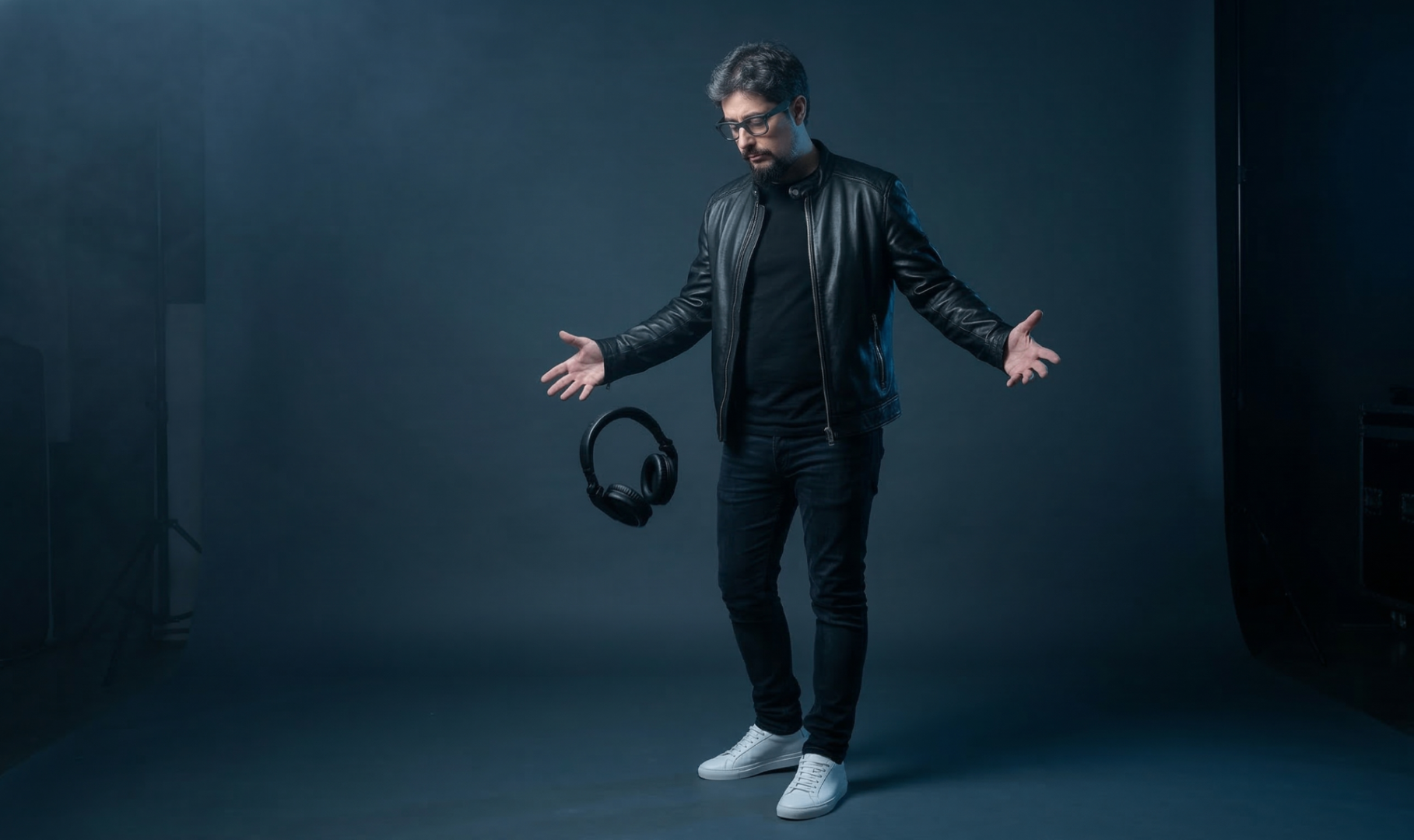
Credit Ron Morven / The GVLE World Records
8. Before music, you developed your voice through writing. How does that background influence the way you structure songs today?
Writing taught me that structure matters. A song, like a story, needs tension, development, contrast, and a final release. I often think in scenes rather than sections. The intro is not just an intro — it is the opening shot. The chorus is not only a hook — it is the moment when the emotional meaning becomes clear.
That background also makes me very focused on atmosphere. I am interested in what a song suggests beyond the words: the place, the temperature, the movement, the invisible story around the sound.
9. What do you hope listeners feel during the final moments of Paper Sun when the track reaches its emotional lift and release?
I hope they feel a sense of air coming back into the room. The final lift is meant to feel like pressure breaking open — not in an aggressive way, but in a bright, emotional way.
For me, that moment is the track’s release point. It is like coming out of traffic, or out of a repeated thought, and suddenly seeing space again. I want listeners to feel movement, relief, and maybe a little nostalgia too — the kind of emotion you do not need to explain immediately.
10. As your official debut single, what kind of artistic statement did you want Paper Sun to make about Ron Morven as a project?
I wanted Paper Sun to say that Ron Morven is not only about tracks, but about worlds. The project is built around melody, movement, atmosphere, and storytelling. Dance music can be emotional and cinematic without losing its energy, and that is the space I want to explore.
As a debut, Paper Sun felt right because it introduces the core identity: transatlantic, visual, melodic, and narrative. It has a dance pulse, but it also has a story behind it. That is the direction I want Ron Morven to keep developing.
UFO Network brings you music news daily! See more news here
Listen on Spotify
Connect