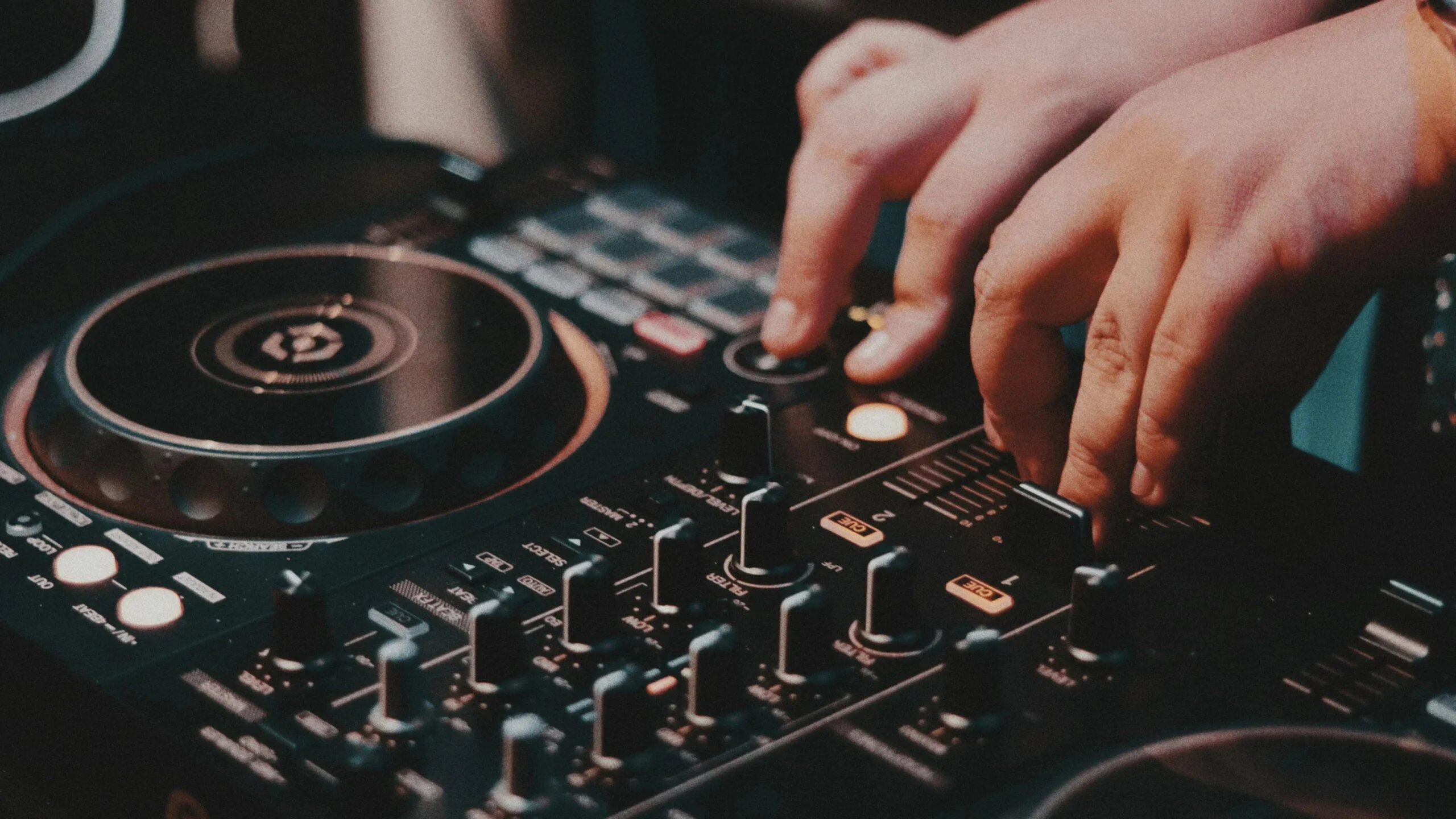
Two tracks can look like an easy pair in a library and still fight each other in the mix. The BPMs match, both kicks land together, and then two vocals arrive at once. You can catch that in rehearsal if you play through the handoff instead of auditioning the tracks separately.
To plan a DJ set, pick an opener, the tracks that change the room’s energy, and a possible closer. Arrange a few tracks around each of those choices, then rehearse the transitions most likely to cause trouble. Save where to bring the next track in, where to take the current one out, and a backup you have actually tried.
Try the exercise below in Waveluma’s DJ Set Planner. Put two tracks next to each other, then choose Rehearse set to load a playable pair in the browser mixer.
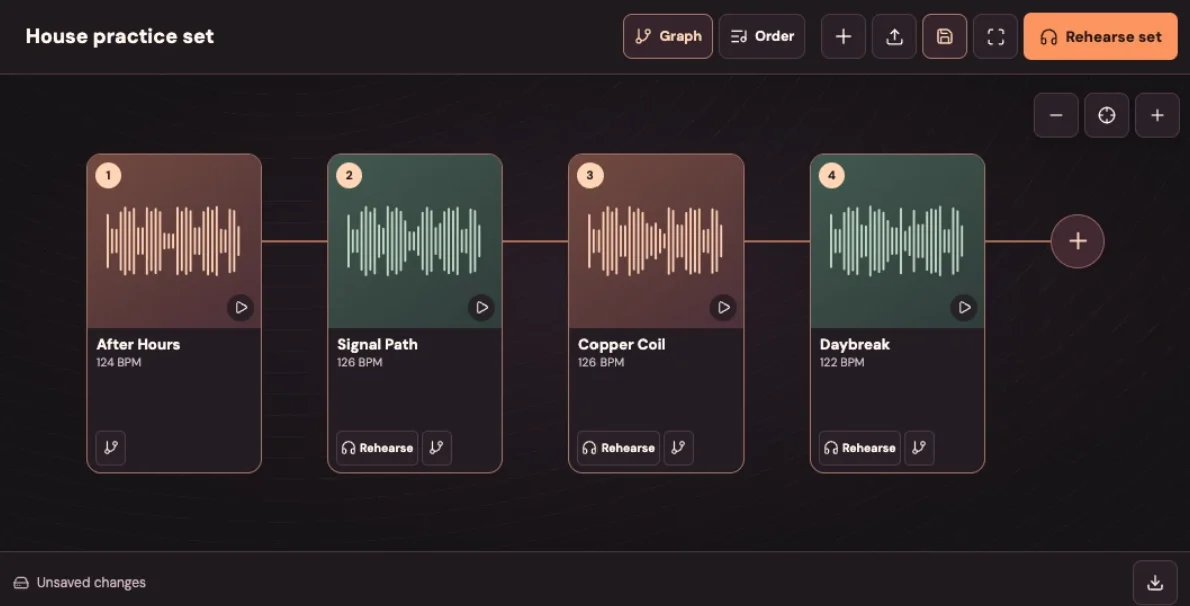
Waveluma’s DJ Set Planner shows the running order and alternative transitions.
Start with the room and the slot
Imagine you’re playing the first hour of a house night. People are still arriving, and the next DJ is coming in with a faster, heavier sound. You might open with a track that establishes a groove, use a fuller bassline once people settle in, and keep a closer that gives the next DJ some room to build. The same record you’d use to wake up a quiet room might feel too heavy when the floor is already moving. Decide what each track is there to do.
Mark three jobs on a scratch list. Write down a reliable opener, a track that can lift the room, and one that can hand it over. Between those tracks, work in groups of two or three that already sound good together. A group is easy to move or drop if you start late, get asked to finish early, or find yourself in a room that wants a different pace.
Give each important turning point one meaningful alternative. If your planned lift has a big vocal, try a percussion-led track as a backup. Both can move the set forward, and the percussion choice gives you somewhere to go when the room has already heard several vocal tracks in a row. Put the backup next to the track it follows so it’s easy to find mid-set.
Use BPM to narrow the choices
Here’s a short house exercise you can repeat with your own library. Start with a 124 BPM opener and line up two possible tracks at 126 BPM. One has a drum-led intro. The other introduces a vocal almost immediately. Keep a 122 BPM track nearby for a point where you want to ease the pace.
Both 126 BPM choices ask for the same tempo adjustment. The drum-led track gives you more room if the outgoing track still has a vocal. The vocal-led one might work once the outgoing vocal finishes, or as a shorter handoff. The 122 BPM track could be a deliberate change of pace after a breakdown. Listen for the change in percussion, low end and vocal density as well as the change in tempo.
For each pair, find the point where something changes in the outgoing track. A vocal ends, a bassline drops out, or the drums start to thin. Then listen to the incoming track past the intro. Note how many bars pass before its first bassline or hook. These are useful markers for planning the overlap. An intro can sound roomy on its own and become crowded halfway through the blend.
Rehearse the handoff on two decks
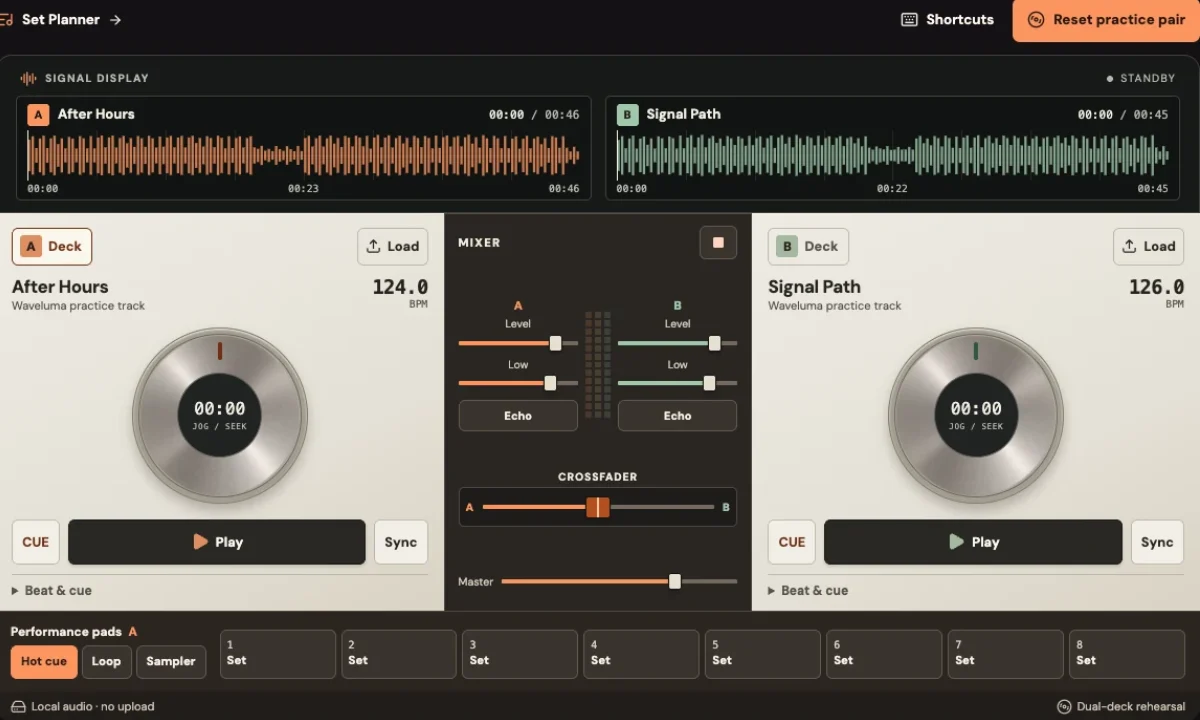
Waveluma’s browser mixer with two built-in practice tracks loaded.
Load the outgoing track on Deck A and the incoming track on Deck B. Find a clear downbeat on the incoming track and choose when it should start in the outgoing one. Count through both sections. In a straight four-beat house track, try an eight- or sixteen-bar overlap as a starting exercise. Listen for the bar where the bass or vocal changes and shorten the overlap if the phrases call for it.
Match the tempo, then listen to the kicks and claps together for several bars. If they start to drift, check the first beat and the timing before moving the crossfader. If the beats are tight but the handoff still feels wrong, play it again and listen through the phrase change. You may hear a new verse start one bar before the outgoing hook ends. Try launching Deck B at the next phrase boundary and see if the change lands with less clutter.
On the first pass, keep Deck B’s low end down as you introduce it. Bring that bass up as you take Deck A’s down, somewhere the arrangement gives you room. Listen to the output. If the middle of the blend gets louder or muddy, play it again with less overlap. If it loses its punch, check whether both tracks lost their bass at the same time. Sometimes the cleanest mix is a quick swap as the phrase changes.
In the online DJ mixer, bring your own MP3 or WAV files, or load the built-in practice tracks. If you’ve added a catalog reference, link an audio file to it before loading it onto a deck. Save the cue points and a note after the blend, then move to the next pair.
Write the cue note you’ll want at the gig
“Mix slowly” is hard to act on in the booth. A note such as “Start B on the first bar after A’s vocal. Swap bass after eight bars. Use the drum intro if the vocal still sits on top” tells you what to listen for and where to move. Use names you can recognize quickly. If your cue times matter, include the track version too. A radio edit and an extended mix might bring in the same hook at very different points.
Mark each tricky pair as ready or needing another pass. Keep a short list of the jumps that deserve your rehearsal time, especially the biggest tempo change, an overlap between two vocals, and the closer. Practise one recovery as well. If you miss the planned entry, let the outgoing track reach another phrase boundary and try the shorter transition you prepared. Run it once with the backup track so you know where that entry sits.
Keep the note for each pair separate. If you replace the second track in a three-track group, rehearse the way into it and the way out. The substitute may solve the first blend and leave you with a short outro for the next one. When the order is settled, export the setlist and notes or take a copy on your phone. Bring the audio files separately.
Before leaving, play your opener into the second track, one energy change, and the last handoff you’re likely to use. Keep the running order and cue notes where you can reach them. You’ll know what to play when the room responds the way you expected, and you’ll have an audible option when it doesn’t.