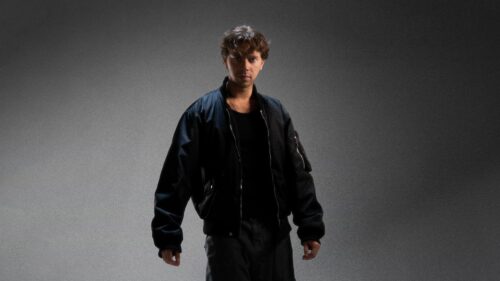
In an era where house music constantly reinvents itself, few emerging artists are carving out a signature as distinctively as Veni.
The Long Island, New York–born producer has built his identity around a lush, melodic, and atmospheric approach to house — the kind of sound that doesn’t just move bodies, but lingers in the soul long after the kick drum fades.
What started as a casual exploration quickly turned into obsession. Hours blurred into nights as Veni dove deep into sound design, arrangement, and mixing. The more he created, the clearer his internal musical language became. Veni describes his creative process as hearing music in his mind before it ever reaches the speakers – a phenomenon famously associated with legends like Michael Jackson and classical masters such as Johann Sebastian Bach, Wolfgang Amadeus Mozart, and Ludwig van Beethoven. For Veni, melodies aren’t constructed note-by-note; they arrive fully formed, waiting to be translated.
Like many producers of his generation, Veni’s early catalog lived inside his bedroom. He spent countless sessions trying to emulate the sounds of his idols, dissecting arrangements and rebuilding them piece by piece. These formative years weren’t about fame or streaming numbers – they were about understanding how emotion travels through chords, how tension releases through drops, and how atmosphere can turn a track into a memory.
In 2022, recognizing the need to sharpen his technical edge, Veni enrolled at SAE Institute in New York City to study sound design. The move marked a pivotal transition from passionate hobbyist to disciplined craftsman. At SAE, he refined the fundamentals — mixing theory, acoustics, advanced synthesis, and the psychology of sound. More importantly, he learned how to translate the music he heard internally into polished, professional productions. Education didn’t replace his instinct; it amplified it.
Graduating with sharpened skills and clearer vision, Veni positioned himself for the next chapter of his journey. Following graduation, Veni secured an internship at Jungle City Studios in New York City — a world-class recording facility owned by Alicia Keys and Grammy Award–winning engineer Ann Mincieli.
Today, Veni balances his creative ambition with everyday reality, working as a caddy while continuing to build his musical presence. It’s a reminder that many artists’ journeys are not glamorous – they are fueled by resilience. Despite the hustle, his commitment to his sound hasn’t wavered. Through social media, he consistently shares melodic sketches, atmospheric loops, and evolving house productions that showcase his growth. Each post feels like a window into his mind — layered chords, swelling pads, and emotional leads that hint at something larger on the horizon.
His ultimate ambition? To become the second coming of Avicii. It’s a bold declaration, but not an empty one. Like Avicii, Veni aims to fuse melody-driven songwriting with dancefloor impact. He believes house music can be both euphoric and intimate — festival-sized yet deeply personal. What sets Veni apart isn’t just technical skill or aspiration. It’s his unwavering devotion to melody. In a scene often driven by drops and trends, he remains committed to emotional resonance.
For Veni, the journey started with a spontaneous moment at a keyboard in 2019. Since then, it’s been a steady climb marked by discipline, education, and vision. If his trajectory continues on its current path, the Long Island producer may very well transform those melodies he hears in his mind into records that echo far beyond his bedroom walls — and onto dancefloors around the world.
1. You’ve said your journey began with a spontaneous night at the keyboard in 2019. Can you take us back to that exact moment — what did it feel like when those first melodies started flowing?
It felt euphoric. It seemed like I was just naturally playing keyboard.
2. You describe hearing fully formed music in your head before producing it — similar to how legends like Michael Jackson and composers such as Johann Sebastian Bach and Ludwig van Beethoven experienced music. How do you translate something so internal and intuitive into a polished, technical production?
It’s not as easy as it sounds to piece everything but it makes music composition easier for me all together.
3. Many producers start by imitating their idols before finding their own sound. At what point did you feel your music shift from emulation to true identity?
While I was at school studying sound design was probably when I started developing my own sound.
4. Your style leans into lush, atmospheric, melodic house. In a scene often dominated by harder drops and fast-moving trends, how do you stay committed to emotional depth over hype?
I just make what comes to me and for me that’s melodic house music. I feel like I developed my own genre in a way.
5. Studying sound design at SAE Institute marked a turning point for you. What’s one technical concept you learned there that completely transformed your production quality?
Studying at SAE helped with EQ. I always struggled with EQ but understand how to use it a lot better because of SAE.
6. Interning at Jungle City Studios — owned by Alicia Keys and engineer Ann Mincieli — must have been eye-opening. What did being in that elite studio environment teach you about what separates a good record from a great one?
It was just an awesome atmosphere to be around. Huge artists would come in every day. I wouldn’t take part in production of the records unfortunately but I just loved being there. It was probably the best job I ever had.
7. You balance building your music career while working as a caddy — how has that grounded, everyday hustle shaped your mindset as an artist?
It just goes well with what I’m trying to achieve with the music. I make great money as a caddy and can kind of choose my times to work if I needed to do something for the music.
8. You’ve openly said you want to become the “second coming of Avicii.” What does that really mean to you — is it about melodic songwriting, emotional impact, global scale, or something else entirely?
That’s a good question. I think Avicii is one of the greatest producers of all time. His music is timeless and he had such a unique style that I try to replicate. What it means is that I’m trying to change music. Bring back music like how he made in the 2010s. I feel like EDM doesn’t get the recognition that it deserves and I want to change that with the music that I make.
9. When you approach a track as a story — intro, build, drop, atmosphere — do you usually begin with emotion, chords, sound design, or a narrative concept?
I start with a kick and usually make a melody on top of it to get into the record then go from there.
10. If someone walked into a club five years from now and heard a Veni record without knowing it was yours, what emotional signature or sonic fingerprint would instantly tell them: “That’s Veni”?
The fact that the music is timeless.
UFO Network brings you music news daily! See more news here
Listen on Spotify
Connect with Veni